The Right to Read: Restoring Autonomy and Personhood in Care Settings
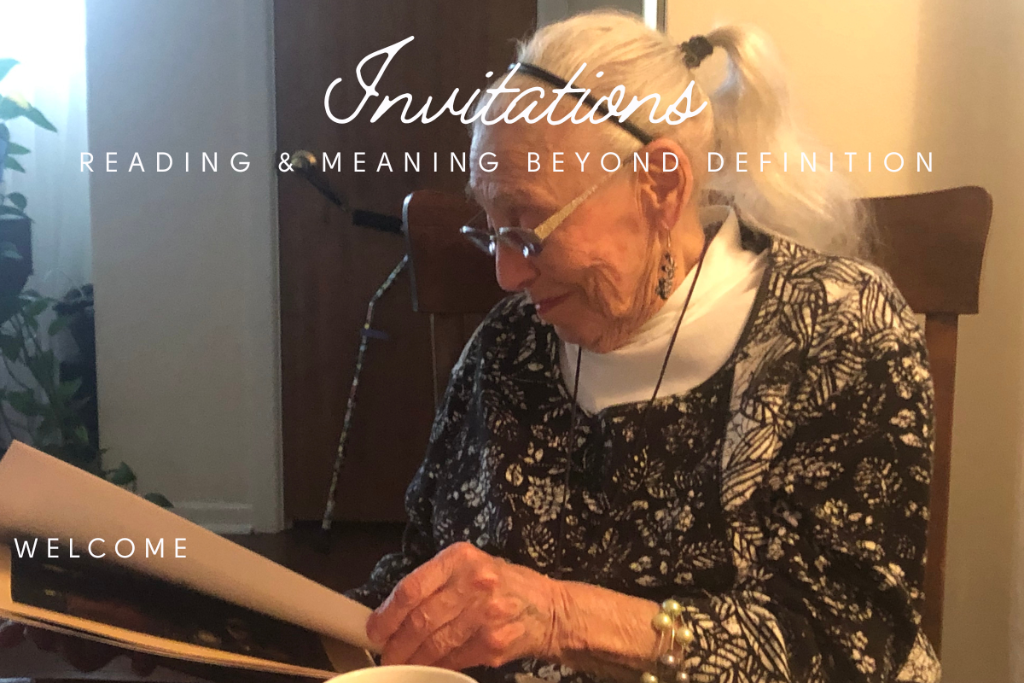
When my mother-in-law, Mary, an avid reader, was living in memory care with Lewy body dementia, her relationship with reading transformed dramatically. Her beloved Boston Globe, Patriot Ledger, and large-print fiction mysteries sat untouched on her bureau. The magazines and puzzles we carefully selected seemed to frustrate her more than engage her.
One afternoon, while discussing her old neighborhood in Boston, something remarkable happened. Mary became animated, spinning stories about her friends and teenage years with a clarity and energy that surprised us. In that moment, I realized we needed to reimagine how we approach reading materials for people with cognitive challenges, not as a simple pastime, but as a meaningful connection to personal identity and experience.
Similar observations emerged from other care partners. Nikki Jardin's Aunt Rebecca in Portland loved her magazines but could no longer engage with them, growing restless. Luke Gilligan noticed older adults at his mother's geriatric practice who treasured handling their daily newspapers, regardless of their ability to fully read them.
Three care partners, three stories; each revealing the profound significance of reading beyond mere comprehension. As Alberto Manguel writes, "Reading is a form of memory, a way of creating infinite spaces within the finite space of a book."
The Material Citizenship Crisis
When individuals transition to care settings, they experience what researchers call a "divestment of material citizenship"; a critical loss of personal possessions that form the foundation of identity and autonomy. In her groundbreaking ethnographic study, Dr. Kellyn Lee revealed that residents are rarely involved in decisions about their personal possessions, often lacking control over objects crucial to maintaining their sense of self.
These aren't merely objects; they're portals to personal history, intellectual stimulation, and spiritual connection. Lee's research demonstrates that object relations are a critical but often overlooked site of citizenship, particularly for individuals with dementia. Beyond framed photos and cherished mementos, reading materials represent a profound mechanism for preserving personal identity.
Yet in most care environments, reading is confined to scheduled activities or community spaces, removing the fundamental right to engage with text when and where one chooses. Dr. Atul Gawande notes in Being Mortal that institutional care often prioritizes safety and efficiency over autonomy and meaning. The absence of accessible reading materials in personal spaces represents this precise tension, a well-intentioned standardization that inadvertently diminishes personhood.
Reading Deserts: The Pandemic's Hidden Impact
The pandemic dramatically worsened this situation. In the name of infection control, many facilities removed shared reading materials entirely. Books, magazines, and newspapers, already limited, vanished completely, creating what can only be described as "text deserts" in environments where meaningful stimulation was already scarce.
This fear-based response persists despite CDC guidance indicating that paper materials need only rest for 72 hours between users to eliminate viral transmission risk. No special treatments or wipeable paper is required; just a simple quarantine period.
The resulting absence of reading materials has created an unprecedented literacy crisis in care settings, one that extends far beyond the pandemic's immediate health concerns.
The Cognitive Mismatch
Tom Kitwood's pioneering work on person-centered care emphasizes that maintaining personal identity is crucial in understanding dementia. What appears as disinterest in reading among older adults is often a complex interplay between changing cognitive abilities and available materials. As we age, subtle shifts in processing speed, working memory, and visual acuity can transform how we interact with text, not diminishing intellectual curiosity, but requiring more thoughtful approaches to reading access.
A comprehensive longitudinal study found that older adults who read frequently (at least once a week) experienced a significantly reduced risk of cognitive decline. The study demonstrated that regular reading increased cognitive function, with a protective effect that persisted regardless of educational background.
These changes are not about declining intelligence, but about adapting to new cognitive landscapes. A standard magazine or novel that once felt effortless may now require more mental navigation. The challenge isn't the reader's capability, but the design of the reading materials themselves.
Accessible reading isn't about simplification. It's about creating materials that respect cognitive complexity while providing multiple entry points for engagement. Large print isn't infantilization; it's an invitation. Thoughtful page design, considered typography, and materials that connect to lived experience become bridges to continued intellectual connection.
The NostalgiaWorks Solution
This is why we created NostalgiaWorks, building on the foundation of NANA'S BOOKS to provide intentionally designed reading materials that meet older adults where they are cognitively, emotionally, and spiritually.
Our approach addresses the material citizenship gap by providing:
- Adaptive formats that accommodate changes in cognitive processing
- On-hand availability in personal spaces, not just community areas
- Self-directed engagement that can happen at any time of day
- Content that respects intelligence while acknowledging processing changes
- Multi-level entry points from text reading to visual engagement
These materials are more than passive objects. They are sources of autonomy and comfort. On-hand reading materials allow residents to engage at their own pace, creating a soothing personal ritual that asks nothing additional of care staff. The ability to pick up and put down a book, to drift through familiar pages, or to simply hold a meaningful text becomes a quiet, self-directed form of emotional regulation and connection.
These are sophisticated publications, thoughtfully designed to bridge the gap between current cognitive abilities and lifelong intellectual identity. They offer a form of engagement that is entirely self-determined, requiring no additional intervention or management from care staff. Aligned with the United Kingdom's DEEP Guide for dementia-informed texts, these materials respect the intellectual dignity and communication needs of individuals with cognitive challenges.
Impact and Rights
The International Federation of Library Associations recommends 4 to 6 books per bed in care settings, a standard rarely met even in the best environments.
Beyond mere numbers, what's at stake is a fundamental right to engage with ideas, stories, and information, a right that doesn't disappear with a dementia diagnosis or care setting transition. As dementia advocate Kate Swaffer notes, "human rights don't have a best before date."
The right to read is fundamentally about maintaining personal agency. When reading materials are placed within easy reach, designed with cognitive flexibility, and aligned with individual interests, they become more than pages; they become portals to continued self-expression, memory, and personal narrative.
Joining the Movement: Restoring Reading Autonomy
For engagement leaders, administrators, and care partners in senior housing and elder care, transforming reading access is more than an activity; it's a fundamental act of dignity and connection. The goal is to create reading ecosystems that honor individual identity, preserve personal agency, and support continued intellectual and human engagement.
Practical Strategies for Meaningful Reading Access
Personalized Reading Collections
- Develop robust, diverse collections that reflect residents' life experiences, interests, and cultural backgrounds
- Include materials across multiple formats: large-print books, magazines, newspapers, and tactile reading resources
- Create systems for residents to easily browse, select, and change their reading materials independently
Adaptive Design
- Implement thoughtful typography and page design
- Consider visual acuity and cognitive processing changes
- Create materials that invite engagement without overwhelming
Collaborative Collection Development
- Involve residents in selecting reading materials
- Recognize that reading preferences are deeply personal
- Respect individual cognitive abilities and interests
Call to Action
Transform your care environment from a place of limitation to a space of continued growth, connection, and personal expression. By prioritizing meaningful reading access, you're not just providing materials; you're restoring fundamental human rights.
The right to read doesn't diminish with age or cognitive change. It is a lifelong connection to identity, imagination, and human experience.
Meaningful reading access isn't an added service; it's an essential aspect of person-centered care that honors the whole individual: their past, present, and continued potential for growth and connection.
Selected Bibliography
- Lee, K., & Bartlett, R. (2021). Material Citizenship: An ethnographic study exploring object-person relations in the context of people with dementia in care homes. Sociology of Health & Illness, 43(6), 1–16. https://doi.org/10.1111/1467-9566.13321
- Gawande, A. (2014). Being Mortal: Medicine and What Matters in the End. Metropolitan Books.
- International Federation of Library Associations and Institutions. (2017). Library Services to People with Special Needs. IFLA Professional Reports, No. 123.
- Swaffer, K. (2016). Dementia: Positioning Persons with Dementia through Narrative and Advocacy. Dementia, 15(1), 11–16.
- Kitwood, T. (1997). Dementia Reconsidered: The Person Comes First. Open University Press.
- Centers for Disease Control and Prevention. (2020). Cleaning and Disinfecting Guidance for Libraries. CDC COVID-19 Response Library Guidance.
- DEEP Network. (2021). The DEEP Guide: Creating Dementia-Friendly Communication. Joseph Rowntree Foundation, United Kingdom.
- Manguel, A. (2019). The Library at Night. Yale University Press.
- Wu, C., et al. (2023). Longitudinal Association Between Reading Frequency and Cognitive Function in Older Adults. Journal of Aging and Health, 35(6), 523–540.